How to Plan a Car-Free Walking Week in the Italian Countryside
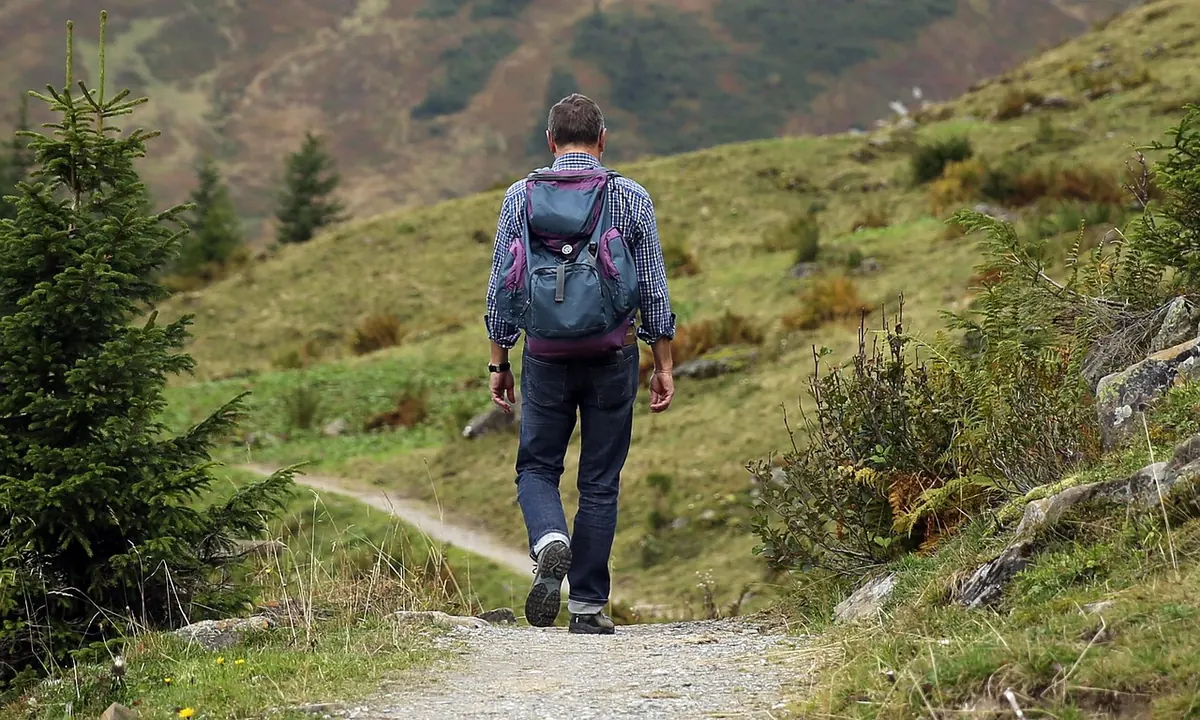
A car-free walking week in the Italian countryside is less about heroic mileage than about a good chain of small decisions. If a railway station is within reach at the start or end of each walking day, the week starts to look simple: walk, sleep, eat, repeat, with a train as the safety net. The trick is to plan backwards from the timetable and forwards from your legs, then leave enough slack for a slow lunch or a closed path.
Start with the railway map, not the trail map
Regional trains are the spine of a car-free week in rural Italy. They stop at places that long-distance travellers skip: Buonconvento on the edge of the Val d’Orcia, Spello and Foligno below the Umbrian hills, or small stations along the Ligurian coast. Open a rail map for the region you fancy and mark the stations that sit near villages, trailheads, or the start of a promising footpath. Then look at the trail map and see which of those places can be linked on foot.
Frequency matters more than distance. Some rural lines have only a handful of services a day, and fewer on Sundays. Write down the last useful train of the day before you fall in love with a route. Check, too, where the station actually is: sometimes it is in the village, sometimes it is a concrete platform two kilometres outside it, with no taxi waiting. That last mile is part of the walk, so count it.
Pick a route shape that fits the trains
Most successful car-free weeks use one of three shapes. Choose the one that matches your appetite for logistics, not just your appetite for scenery.
Station-to-station, linear
You start at one station, walk for four or five days, and finish at another station with a train back. This is the cleanest option. Your luggage can move ahead, your return is booked, and every day has a clear end point. It also makes a short week feel complete rather than chopped in half.
One village, day walks
Base yourself in a village with a station, a bakery, and a couple of restaurants. Walk out and back, or take a short train to a neighbouring stop and walk home. You unpack once, which is a luxury on a walking trip, and bad weather costs you a day rather than a whole itinerary.
A loop from one station
Loops are satisfying, but in rural Italy they often involve long transfers on minor roads or a trail that looks circular on paper and is not. If you choose a loop, keep it modest and check that the return leg does not depend on a single afternoon bus.
- Choose a rail corridor with villages you actually want to sleep in.
- Mark five or six possible overnight stops, then cut one to leave breathing room.
- Sketch walking days of roughly 12–18 kilometres, shorter where the hills are steep.
- Check the first and last train of each day, plus one backup connection.
- Only then book rooms, because the timetable may change the order of the week.
Build days with an escape route
A walking week is usually five walking days, not seven. Use the spare days for arrival, departure, laundry, or a short transfer. On paper, a 22-kilometre day with 700 metres of ascent may look fine; with a late start, a closed bar, and a hot afternoon, it can turn into a slog. Be honest about your usual walking pace and add time for photographs, map checks, and the inevitable wrong turn at a fork.
Every day should have a bail-out. That might be a station, a village bus stop, or a saved taxi number. Ask your accommodation what locals do when the weather turns. Carry water, a hat, a charged phone, offline maps, and some cash for a bar that does not take cards. Tell your host when you expect to arrive, especially if you are walking in shoulder season when reception may close early. If you have heart, knee, or other health concerns, get advice from a qualified professional before committing to long days.
Book sleeps and suppers before you finalise the walk
Rural accommodation is often small and family-run, and the person who answers the phone may also be the person who cooks dinner. Confirm three things before you book: how you reach the door from the station, whether dinner is available or there is a restaurant within walking distance, and whether they can store a bag or help arrange a transfer. A station hotel may look dull online, but it can be the difference between a calm arrival and a dark walk along a provincial road.
Check opening days carefully. Many village restaurants close one or two days a week, and some close earlier in winter. Sunday evenings and public holidays can be unusually quiet. If you are arriving late, arrange key collection in advance. A short message saying “I am walking from the station, I expect to arrive at six, and I would like dinner if possible” prevents a lot of hungry confusion.
Solve luggage before you leave home
There are two sane approaches. The first is to carry everything in one comfortable pack of roughly 7–9 kilograms and treat the train as part of the walk. The second is to use a luggage-transfer service on popular routes and keep only a daypack with you. Transfer operators exist on several long-distance trails, but they do not cover every village, every day, or every budget. Book ahead, confirm the exact dates and addresses, and keep the arrangements in writing.
- Pack for repetition: two walking outfits, one evening layer, a rain shell, and shoes you can wear on the train.
- Use a soft bag: it fits into overhead racks and the boot of a small taxi far more easily than a hard suitcase.
- Keep essentials on you: passport or ID, cards, phone, charger, water, and any medication you need.
- Plan laundry every three or four days: a sink wash and a line by the window will reset the wardrobe.
- Do not rely on station lockers: many small stations have none, and opening hours can be limited.
Trains, buses, and the last mile
Buy regional train tickets before boarding, and validate paper tickets in the machines where required. Digital tickets are usually tied to a specific train, so check the conditions before you get comfortable. On rural buses, tickets may be sold at a tabacchi, a bar, or occasionally on board; ask locally rather than assuming. Sunday schedules can be thin, and the last bus may leave before the last train.
The last mile is where car-free plans often wobble. A gravel track that looks short on a map can be muddy, unlit, or lined with dogs. Arrive in daylight when you can. Save taxi numbers for the area, even if you never call them. If you miss a connection, resist the urge to sprint with tired legs; sit down, find the next train or bus, and adjust the day. A short taxi to a different station is sometimes cheaper and calmer than forcing a route that no longer fits the clock.
The week before you go
Re-check train times, trail closures, accommodation addresses, and the weather. Download offline maps and screenshot the booking confirmations. Send someone at home a rough route and your nightly stops. Charge everything, pack less than you think, and leave the first afternoon free of any ambitious walk. A car-free week works because the plan has slack in it. Start with four days station to station if this is your first attempt, and build the longer version once you know how you like to travel.
Photo: Hermann / Pixabay